Play, Learn, Grow: Fun and Easy Home Activities for Babies to Preschoolers
As a parent or caregiver, finding ways to keep your little one entertained while fostering their growth can be both rewarding and challenging. Fortunately, there are countless simple and fun activities you can do at home that support a child’s cognitive, motor, and emotional development. From sensory play for infants to creative projects for preschoolers, here are some engaging ideas that will not only keep your child busy but also help them reach important developmental milestones.
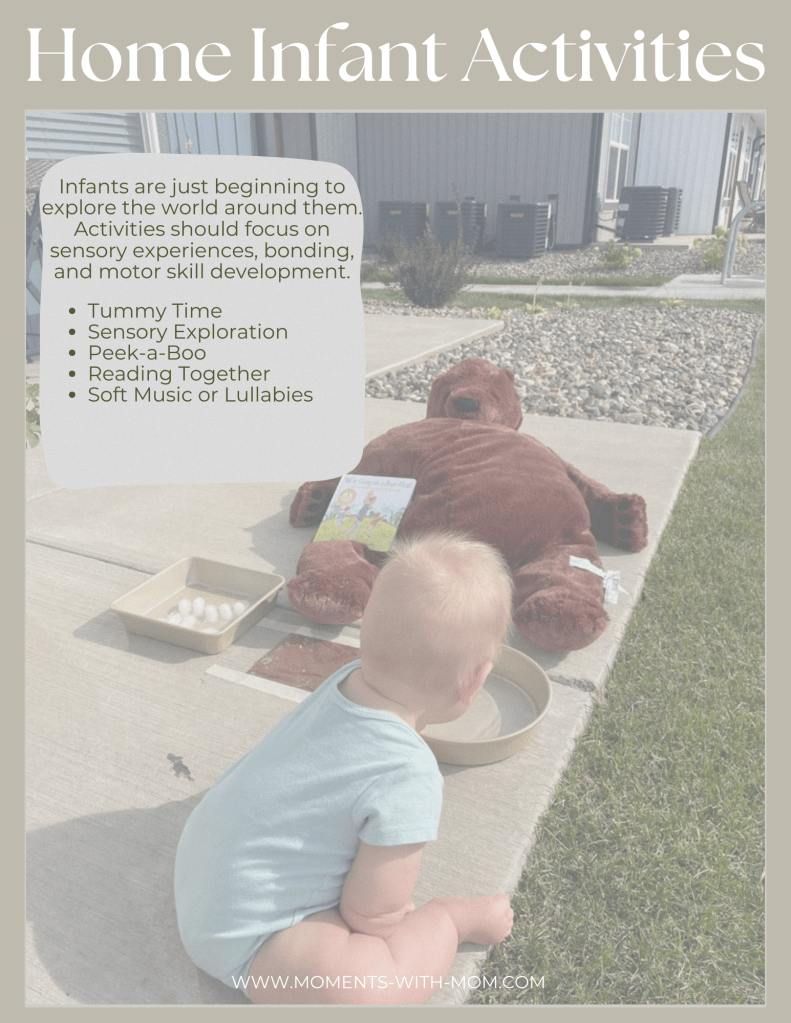
For Infants (0-12 months): Early Exploration and Bonding
In the first year, babies are discovering their senses, building physical strength, and beginning to interact with the world around them. Activities during this stage should focus on sensory experiences, physical development, and creating strong bonds with caregivers.
- Tummy Time: This essential activity helps strengthen your baby’s neck, back, and shoulder muscles. Place a soft mat or blanket on the floor and let your little one explore while supervised. Start with short intervals and gradually increase the time as your baby builds strength.
- Sensory Play: Use colorful toys with different textures, like soft plush animals or rubbery teethers. Shaking a rattle or making gentle sounds can captivate your infant’s attention and stimulate their auditory and visual senses.
- Peek-a-Boo: The timeless game of peek-a-boo not only brings joy but also teaches object permanence—the concept that objects still exist even when hidden. Plus, it’s a great way to bond and have fun together.
- Reading Together: Even though your infant can’t understand the words, reading aloud to them helps build language skills and introduces them to new sounds and rhythms. Choose books with bright colors, bold pictures, and simple text.
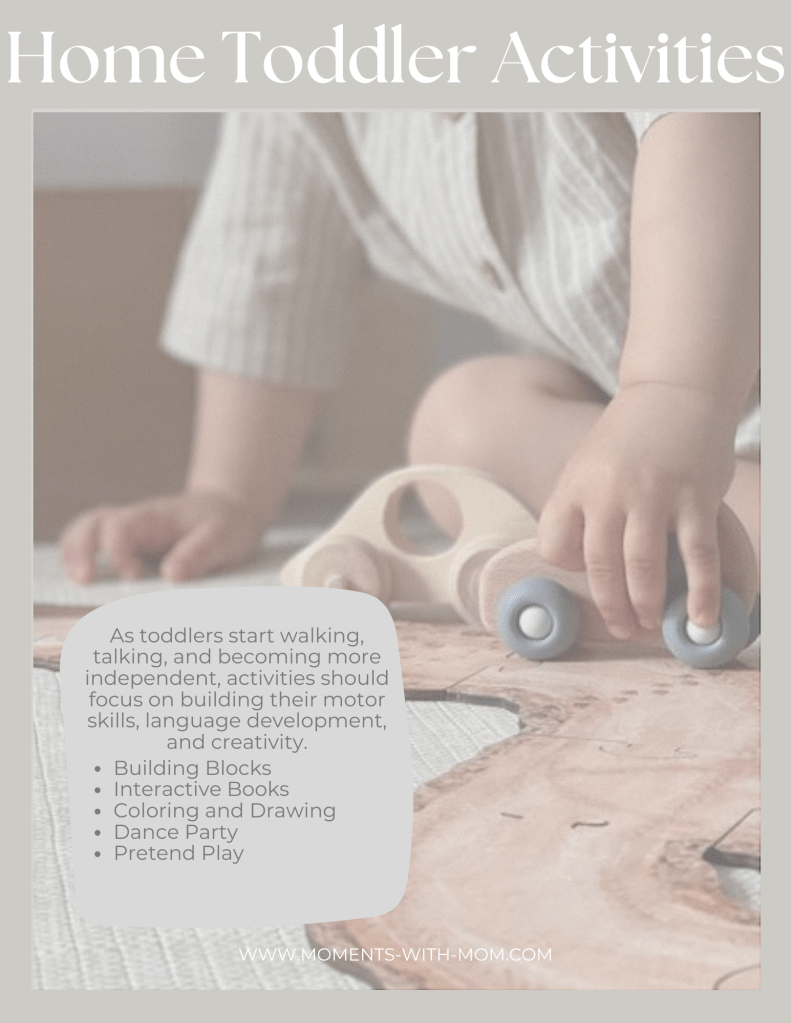
For Toddlers (1-3 years): Building Skills and Independence
Toddlers are busy learning to walk, talk, and assert their independence. At this stage, activities should promote fine and gross motor skills, early literacy, and social development.
- Building Blocks: Whether you’re stacking wooden blocks or playing with soft, large-sized building toys, these simple items can help develop your toddler’s hand-eye coordination and problem-solving skills. It also sparks creativity as they learn to build and create.
- Interactive Books: Look for books with touch-and-feel elements, flaps to lift, or sound buttons that will keep your toddler engaged while learning new words. These interactive books promote cognitive development and language skills.
- Coloring and Drawing: Providing crayons and paper allows toddlers to explore their creativity. As they scribble and color, they develop fine motor skills and begin to understand shapes and colors. Keep it playful, and don’t worry if their “artwork” doesn’t look perfect—it’s all part of the learning process!
- Dance Party: Toddlers love to move! Put on their favorite tunes and encourage them to dance along. Dancing is a fantastic way to improve coordination and balance while also burning off some energy.
- Pretend Play: Toddlers enjoy role-playing, whether it’s pretending to talk on the phone, “cooking” in a toy kitchen, or having a tea party. These activities develop imagination, language skills, and social interaction.
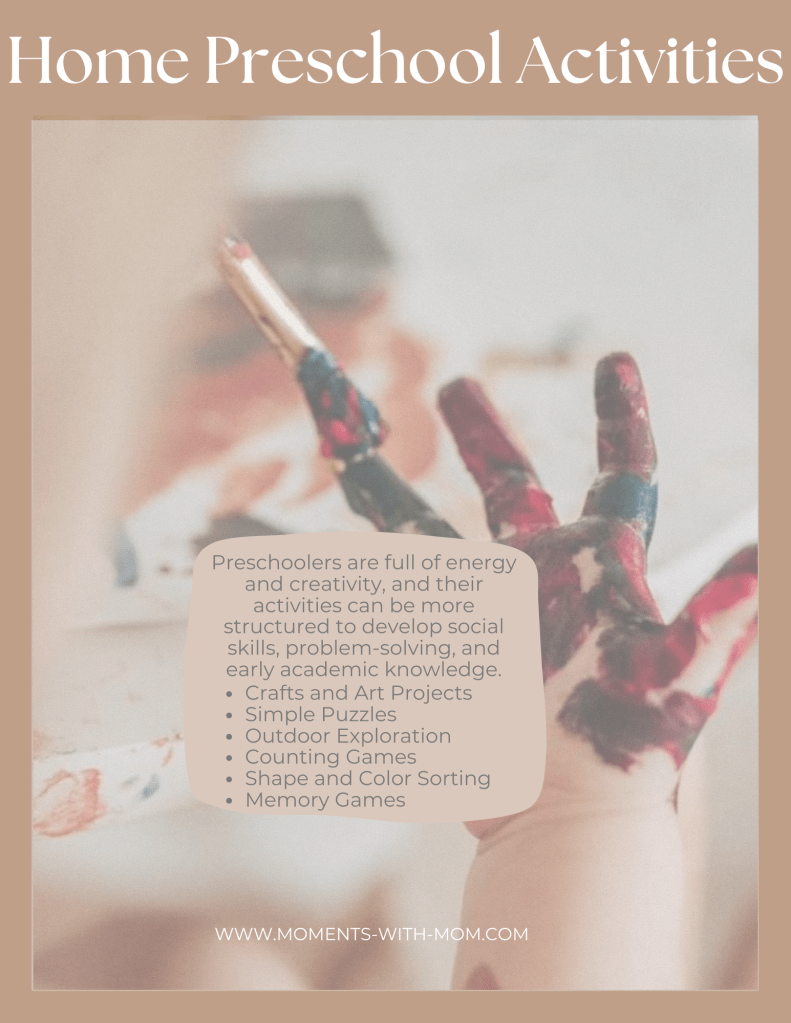
For Preschoolers (3-5 years): Encouraging Creativity and Problem-Solving
Preschoolers are ready to engage in more structured activities, and they love using their imagination. At this age, children are eager to explore, solve problems, and develop more advanced skills.
- Crafts and Art Projects: Get creative with construction paper, glue, glitter, and stickers! Preschoolers love to create their own masterpieces. These craft activities help improve fine motor skills, encourage creativity, and allow for emotional expression.
- Puzzles: Simple puzzles with large pieces are perfect for preschoolers. They’ll love the challenge of fitting the pieces together, and this activity encourages problem-solving, patience, and cognitive development.
- Outdoor Exploration: Fresh air and outdoor play are essential for your child’s development. Whether it’s a nature walk, a treasure hunt in the backyard, or a simple game of catch, outdoor activities help develop gross motor skills and teach your child about the world around them.
- Counting Games: Use everyday objects like fruits, blocks, or toys to practice counting. Songs and rhymes such as “Five Little Ducks” are also fun ways to introduce numbers. These activities lay the foundation for early math skills.
- Memory Games: Help boost your preschooler’s memory with simple matching games. You can use cards or create your own memory games using items around the house. This activity encourages concentration, memory recall, and focus.
Additional Tips for Engaging Your Little One
- Establish a Routine: Children thrive on consistency. Set aside a regular time each day for activities so your child knows what to expect. This routine provides structure and can help reduce anxiety.
- Limit Screen Time: While technology offers educational content, too much screen time can have negative effects on a child’s development. Balance screen time with interactive, hands-on activities that stimulate imagination and physical activity.
- Safety First: Always ensure that any activity or toy is age-appropriate and safe. Check for small parts, sharp edges, or any other hazards that could be dangerous for young children.
By integrating these fun, educational activities into your day, you’ll not only be keeping your child entertained but also helping them build essential skills that will last a lifetime. Whether they’re an infant just beginning to explore the world or a preschooler full of creative energy, there are endless ways to make learning and play a part of your everyday routine. The best part? You get to join in the fun and watch your child grow, learn, and thrive right before your eyes!

 Moments With Mom
Leave a reply to Play Guides – Moments With Mom Cancel reply